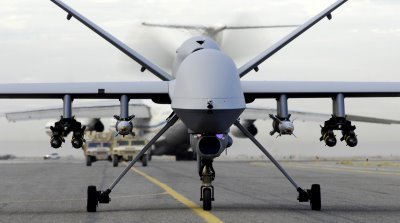
Firefighting Robots
Remote controlled robots formerly used in combat situations in Iraq are now being used by London firefighters to combat dangerous fires; especially when they find acetylene gas is part of the situation.
Created by defense contractor, QinetiQ, the tree robots will be able to enter into danger areas and safely deal with the gas cylinders.
This is important because even if acetylene gas cylinders have cooled off, they are still a danger to explode, and so the robots can help deal with that situation safely.
Because of that, fire crews have had to stop transport links for up to a period of 24 hours and also evacuate local communities from a danger zone.
What the robots can help with is cooling off the cylinders much more quickly, and then they can be remove safely by the firefighters in a more efficient manner.
one robot is able to find a hot acetylene cylinder, while another can cool it off with water quickly. The final robot can clear debris out of the way and also pick up the cylinder with its claw.
In experimental trials, the robots were able to do the job in under three hours, whereas in other situations it has taken firefighters over 19 hours on average to take care of.
The robots and their controllers will work with London firefighters for the next two years, and will be funded by Network Rail, the Highways Agency and Transport for London.
Firefighting Robots
Showing posts with label Professional Robots. Show all posts
Showing posts with label Professional Robots. Show all posts
Wednesday, July 29, 2009


Tuesday, July 21, 2009
JARMC Launches Robotic surgery
Medical Surgical Robots
With the four mobile arms that that are able to rotate, change and grasp at a great range of motion, along with enhanced vision which can see inside the human body, the da Vinci Surgical System robot is becoming a quick hit among hospitals, doctors and patients, as better results and decreased risk come about from the tremendous robotic surgeon.
When you first look at the complex robotic da Vinci Surgical System you may think of a science-fiction movie – demolishing everything in sight – but the state-of-the art technology is providing high-level health care for patients at Jeff Anderson Regional Medical Center.
"It provides our surgeons an alternative to both traditional open surgery and conventional laparoscopy," said John G. Anderson, vice president of JARMC.
"This is a tremendous technology, which provides minimally invasive surgical technology for the patient."
The surgical system empowers surgeons to perform procedures through incisions that are as small as 1 to 2 centimeters with a greater range of motion and increased precision.
Although available at the Meridian hospital since July 1, the surgical system was introduced to JARMC staff Monday during an open house
High-definition brings a lot to the surgeon – he sees his surgical sight so much clearer, magnified by 10 times, but it's high-definition.
The surgical system is currently used for two primary procedures at JARMC: prostatectomy in men, and hysterectomy in women.
"Virtually 80 percent of all prostatectomies in the United States are done by robotics now," Anderson said. "And from a female perspective, laparoscopic hysterectomy is done under robotics."
Not only is robotic surgery popular among physicians, but patients are not only requesting, but in many cases - demanding robotic surgery.
It's a very consumer-driven technology. And hospitals have responded to that demand from both surgeon and patient.
Since its introduction at JARMC, response has been positive – from patients and surgeons, hospital officials said.
"Because of the smaller incision site, there is considerably less loss of blood and then patient recovery is much quicker," Anderson said. "And in many cases, patient outcome is better ... they are able to go home quicker. It's cutting their length of stay down by half.
"We've had a number of physicians that have undergone specialized training and have done a number of cases since July 1."
The robotic surgery may also be used for other surgical procedures, including colorectal, bariatric procedures, as well as some heart surgery procedures. Anderson said these procedures will be added at JARMC, as more surgeons go through the training process.
Medical Surgical Robots
Thursday, July 16, 2009
Could Robots Replace Teachers?
Robot Teachers
Research has found that infants can learn foreign speech sounds when they interact with a live human being in a social setting. But infants under 1-year-old do not seem to learn language when they are read to over TV. The children stare at the TV and even point to it. They seem visually attentive to the images that flow past, but learn no language. Scientists think that social interaction with a live human being is crucial for learning to take place in children under 1 year.
Research at the University of Washington Institute for Learning & Brain Sciences shows that infants can learn foreign speech sounds when they interact with a live human being in a social setting. But infants under 1-year-old do not seem to learn language when they are read to over TV. The children stare at the TV and even point to it. They seem visually attentive to the images that flow past, but learn no language. Scientists think that social interaction with a live human being is crucial for learning to take place in children under 1 year. Credit: University of Washington Institute for Learning & Brain Sciences. In the future, more and more of us will learn from social robots, especially kids learning pre-school skills and students of all ages studying a new language.
This is just one of the scenarios sketched in a review essay that looks at a "new science of learning," which brings together recent findings from the fields of psychology, neuroscience, machine learning and education.
The essay outlines new insights into how humans learn now and could learn in the future, based on various studies including some that document the amazing amount of brain development that happens in infants and later on in childhood.
The premise for the new thinking: We humans are born immature and naturally curious, and become creatures capable of highly complex cultural achievements — such as the ability to build schools and school systems that can teach us how to create computers that mimic our brains.
With a stronger understanding of how this learning happens, scientists are coming up with new principles for human learning, new educational theories and designs for learning environments that better match how we learn best, says one of the essay's authors, psychologist Andrew Meltzoff of the University of Washington's Learning in Informal and Formal Environments (LIFE) Center.
And social robots have a potentially increasing role in these future learning environments. The mechanisms behind these sophisticated machines apparently complement some of the mechanisms behind human learning.
One such robot, which looks like the head of Albert Einstein, was revealed this week to show facial expressions and react to real human expressions. The researchers who built the strikingly real-looking yet body-less 'bot plan to test it in schools.
Machine learning
In the first 5 years of life, our learning is "exhuberant" and "effortless," Meltzoff says. We are born learning, he says, and adults are driven to teach infants and children. During those years and up to puberty, our brains exhibit "neural plasticity" — it's easier to learn languages, including foreign languages. It's almost magical how we learn a foreign language, what becomes our native tongue, in the first two or three years we're alive, Meltzoff said.
Children under three and even infants have been found to use statistical thinking, such as frequency distributions and probabilities and covariation, to learn the phonetics of their native tongue and to infer cause-effect relationships in the physical world.
Some of these findings have helped engineers build machines that can learn and develop social skills, such as BabyBot, a baby doll trained to detect human faces.
Meanwhile, our learning is also highly social, so social, in fact, that newborns as young as 42 minutes old have been found to match gestures shown to them, such as someone sticking out her tongue or opening his mouth, Meltzoff and a colleague reported more than a decade ago.
Imitation is a key part of our learning — it's a quicker and safer way to learn than just trying to figure something out on our own.
Even as adults, we use imitation when we go to a new setting such as a dinner party or a foreign country, to try and fit in. Of course, for kids, the learning packed into every day can amount to traveling to a foreign country. In this case, they are "visiting" adult culture and learning how to act like the people in our culture, becoming more like us.
If you roll all these human learning features into the field of robotics, there is a somewhat natural overlap — robots are well-suited to imitate us, learn from us, socialize with us and eventually teach us, the researchers say.
Robot teachers
Social robots are being used on an experimental basis already to teach various skills to preschool children, including the names of colors, new vocabulary words and simple songs.
In the future, robots will only be used to teach certain skills, such as acquiring a foreign or new language, possibly in playgroups with children or to individual adults. But robot teachers can be cost-effective compared to the expense of paying a human teacher, Meltzoff told LiveScience.
"If we can capture the magic of social interaction and pedagogy, what makes social interaction so effective as a vehicle for learning, we may be able to embody some of those tricks in machines, including computer agents, automatic tutors, and robots," he said.
Still, children clearly learn best from other people and playgroups of peers, Meltzoff said, and he doesn't see children in the future being taught entirely by robots.
Terrance Sejnowski of the Temporal Dynamics of Learning Center (TDLC) at the University of California at San Diego, a co-author of the new essay with Meltzoff, is working on using technology to merge the social with the instructional, and bringing it to bear on classrooms to create personalized, individualized teaching tailored to students and tracking their progress.
"By developing a very sophisticated computational model of a child's mind, we can help improve that child's performance," Sejnowski said.
Still, it's interesting to think of robotic teachers in the future.
Robot Teachers
Thursday, June 4, 2009
Robots | Global Robotics Industry Report for 2008
*The global robotics industry was worth $17.3 billion in 2008 and an estimated $17.6 billion in 2009. This should reach $21.4 billion in 2014, for a compound annual growth rate (CAGR) of 4.0%.
*The industrial robots segment is the largest segment, worth $11.5 billion in 2008. This is expected to decrease slightly to $10.5 billion in 2009, and then grow at a CAGR of 2.8% to reach $12.1 billion in 2014.
*Professional service robots is the second largest segment, generating $3.3 billion in 2008. This should increase to $4.0 billion in 2009 and $5.4 billion in 2014, for a CAGR of 6.0%.
Robotics: Technologies and Global Markets views the robotics industry as presently divided into six types of robots defined by their application:
industrial robots
domestic service robots
professional robots
military robots
security robots and
space robots
Robotics: Technologies and Global Markets recognizes the European Union’s ambitious attempt to establish uncontested leadership in robotics, through the creation of the European Robotic Platform (EUROP) funded jointly by businesses and government. Along these lines, Chapter Three: Common Concerns addresses all of the technical issues identified by EUROP’s working groups. This chapter is equally useful to U.S. and Japanese companies interested in further developing sales in European markets.
Robotics: Technologies and Global Markets is the first study with product demand forecasts that reflect:
The collapse of capital funding for new robot purchases.
The collapse of consumer credit for the purchase of robot–made goods.
The World Bank’s downward adjustment of the gdp in India and China.
The effect of the 2009 U.S. economic stimulus package.
Subscribe to:
Posts (Atom)
